
Nutritive Values of Persian Manna
Nutritive Values of Persian Manna: A Comprehensive Analysis
Abstract
Persian Manna, a unique group of natural compounds derived from insect activity on host plants, is a cornerstone of Iranian traditional medicine, valued for its medicinal and nutritional benefits. This study evaluates the mineral content of Persian Manna, focusing on four prominent varieties: Taranjebin, Shir-Khesht, Bid-Khesht, and Gaz-Alafi. Using Flame Emission Spectrophotometry, we analyzed essential elements, including iron, zinc, and copper. Results indicate that Gaz-Alafi is exceptionally rich in iron and zinc, while Bid-Khesht exhibits the highest copper content. These findings underscore the nutritive value of Persian Manna, positioning it as a potential dietary supplement for addressing mineral deficiencies.
Table of Contents
- Introduction to Persian Manna
- Historical Context of Persian Manna
- Varieties of Persian Manna
- Taranjebin: A Key Variety of Persian Manna
- Shir-Khesht: Nutritional and Medicinal Properties
- Bid-Khesht: A Cost-Effective Persian Manna
- Gaz-Alafi: Mineral-Rich Persian Manna
- Ecological Factors in Persian Manna Production
- Study Design for Analyzing Persian Manna
- Collection of Persian Manna Samples
- Analytical Methods for Persian Manna
- Results and Discussion on Persian Manna
- Copper Content in Persian Manna
- Zinc Content in Persian Manna
- Iron Content in Persian Manna
- Potential Applications of Persian Manna in Modern Nutrition
- Comparative Analysis of Persian Manna with Other Sweeteners
- Future Research Directions for Persian Manna
- Conclusion: The Nutritive Value of Persian Manna
- Acknowledgments
- References
Introduction to Persian Manna
Persian Manna, known as “Angabin” in Persian, refers to a collection of sweet, natural compounds produced through insect activity on young host plant organs. These compounds have been integral to Iranian traditional medicine for centuries, valued for their laxative, antipyretic, expectorant, and anti-hyperbilirubinemia properties. The nutritive value of Persian Manna, particularly its mineral content, has garnered increasing attention in modern nutritional science due to its potential as a bioavailable source of iron, zinc, and copper.
This study focuses on the mineral composition of four widely used varieties of Persian Manna: Taranjebin, Shir-Khesht, Bid-Khesht, and Gaz-Alafi. These varieties, each associated with specific plants and insects, are commercially significant in Iranian herbal markets. By quantifying their iron, zinc, and copper content, we aim to establish Persian Manna as a valuable dietary supplement for addressing mineral deficiencies in vulnerable populations, such as vegetarians, pregnant women, and infants.
The global demand for natural and functional foods has spotlighted Persian Manna as a unique product. Unlike refined sugars, Persian Manna offers a complex matrix of saccharides, minerals, and bioactive compounds, making it a promising candidate for modern nutritional applications. This article provides a comprehensive analysis of the nutritive value of Persian Manna, combining historical context, scientific data, and potential applications.
Historical Context of Persian Manna
Persian Manna has a rich history in Iranian culture, dating back to ancient Persia, where it was revered as a medicinal and nutritional substance. Historical texts, such as those by Avicenna, describe Persian Manna as a remedy for digestive disorders, fever, and jaundice. The term “Angabin,” meaning honey-like, reflects its sweet taste and sticky texture, which made it a popular ingredient in herbal concoctions.
The production of Persian Manna is closely tied to ecological interactions between specific insects and host plants. Local communities in regions like Khorasan, Tabriz, and western Iran have traditionally harvested Persian Manna, leveraging the unique environmental conditions of these areas. Each variety of Persian Manna is associated with specific plants and insects, contributing to its cultural significance.
In modern times, the nutritive value of Persian Manna has attracted scientific interest due to its potential as a functional food. Its mineral-rich composition distinguishes it from other natural sweeteners like honey or maple syrup. This study builds on this historical foundation, providing a detailed analysis of the mineral content of Persian Manna to validate its traditional uses.
Varieties of Persian Manna
The diversity of Persian Manna varieties reflects the complex ecological interactions in Iran’s varied landscapes. Below, we describe the four most prominent types of Persian Manna, their botanical origins, insect associations, and traditional uses.
Taranjebin: A Key Variety of Persian Manna
Taranjebin, also known as Alhagi manna or Caspian manna, is the most economically significant variety of Persian Manna. This semi-liquid, resinous, sweet substance forms on the leaves and branches of camel’s thorn shrubs (Alhagi persarum Boiss. & Bushe and A. mannifera Desf., Fabaceae). Its production is influenced by environmental factors and the froghopper Poophilus nebulosus Leth.
Taranjebin is harvested in regions like Khorasan, Tabriz, and Booshehr during the summer months. In Persian ethnomedicine, Taranjebin is used to relieve fever, cough, and thirst, and as a mild laxative for neonatal jaundice. Studies confirm its bilirubin-lowering effects without toxicity in mice. The nutritive value of Taranjebin lies in its saccharide and mineral content.
Shir-Khesht: Nutritional and Medicinal Properties
Shir-Khesht is produced through the interaction of the insect Scolytus rugolosus Mull. with Cotoneaster species (Rosaceae). The larvae create tunnels under the plant’s bark, causing the exudation of a sweet substance that hardens into yellowish-white granules. Shir-Khesht production depends on insect activity, as unattacked shrubs do not produce manna.
The primary component of Shir-Khesht is mannitol, with smaller amounts of hexose, fructose, glucose, saccharose, mucilage, and resin. It is used to treat jaundice in newborns and is claimed to protect against radiation and serve as an anticancer agent. The mineral content of Shir-Khesht enhances its nutritive value.
Bid-Khesht: A Cost-Effective Persian Manna
Bid-Khesht is a white, hard, and amorphous sweet product formed by the willow giant aphid (Tuberolachnus salignus Gmel.) on Salix species. Its sweetness is derived from saccharose, fructose, and glucose, making it a cost-effective alternative to Shir-Khesht. In Iranian traditional medicine, Bid-Khesht is used to relieve fever, constipation, and oral candidiasis.
The mineral content of Bid-Khesht, particularly its high copper levels, positions it as a valuable dietary supplement. Its accessibility makes it a popular choice for herbalists and consumers seeking affordable Persian Manna.
Gaz-Alafi: Mineral-Rich Persian Manna
Gaz-Alafi, or “Kurdish Gaz,” is a hard, resinous, sweet product harvested from oak forests in western Iran on Quercus species. It is produced by insects like Thelaxes suberi Del. and Tuberculoides annulatus Hart. Gaz-Alafi contains glucose, fructose, saccharose, and polysaccharides.
Traditionally, Gaz-Alafi is used as a demulcent, febrifuge, analgesic, and for treating chickenpox. Its high iron and zinc content suggests significant potential for addressing mineral deficiencies.
Ecological Factors in Persian Manna Production
The production of Persian Manna is influenced by ecological factors such as climate, soil composition, and insect-plant interactions. Taranjebin production, for example, is limited to warm, arid climates where camel’s thorn shrubs thrive. Soil composition plays a critical role in the mineral content of Persian Manna, with plants in mineral-rich soils transferring elements to insects.
Seasonal variations affect manna production, with most varieties harvested during summer when insect activity peaks. Sustainable harvesting practices are essential to maintain the ecological balance required for Persian Manna production. Future research should explore these factors to ensure long-term sustainability.

Study Design for Analyzing Persian Manna
Collection of Persian Manna Samples
One hundred samples of each Persian Manna variety (Taranjebin, Shir-Khesht, Bid-Khesht, and Gaz-Alafi) were collected from 20 herbal markets in Tehran in July 2012. The samples were authenticated by botanical experts to ensure consistency in the analysis of their nutritive value.
Analytical Methods for Persian Manna
Each sample was oven-dried at 60°C, ground to pass through a 60-mesh sieve, and stored in high-density polyethylene bottles. To prevent contamination, glassware and containers were washed, soaked in 10% HNO3, and dried. One gram of each sample was wet-digested with a 6:1 mixture of HNO3 and HCl, heated until a white residue was obtained, and diluted to 10 ml.
The samples were analyzed using a Shimadzu AA-6200 Flame Emission Spectrophotometer to measure zinc, iron, and copper concentrations. All procedures adhered to AOAC guidelines, with a coefficient of variation below 2.5%.
Results and Discussion on Persian Manna
The nutritive value of Persian Manna was evaluated through its mineral content, as summarized below:
| Manna Variety | Copper (mg/kg) | Zinc (mg/kg) | Iron (mg/kg) |
|---|---|---|---|
| Taranjebin | 23.3075 ± 1.55 | 18.6580 ± 1.3323 | 781.5932 ± 25.1118 |
| Shir-Khesht | 33.9141 ± 2.67 | 19.8747 ± 2.1183 | 99.7218 ± 1.3320 |
| Bid-Khesht | 33.9141 ± 2.67 | 14.1661 ± 1.2435 | 138.7188 ± 5.8872 |
| Gaz-Alafi | 30.5 ± 2.0 | 20.6221 ± 1.2435 | 1730.0396 ± 11.6532 |
Copper Content in Persian Manna
Copper supports enzyme activity, bone maintenance, and red blood cell production. Bid-Khesht and Shir-Khesht have the highest copper concentrations (33.9141 ± 2.67 mg/kg), followed by Gaz-Alafi (30.5 ± 2.0 mg/kg) and Taranjebin (23.3075 ± 1.55 mg/kg). These levels align with WHO recommendations, suggesting Persian Manna’s role in supporting metabolic functions.
Zinc Content in Persian Manna
Zinc is vital for immune function and wound healing. Gaz-Alafi has the highest zinc content (20.6221 ± 1.2435 mg/kg), followed by Shir-Khesht, Taranjebin, and Bid-Khesht. The bioavailability of zinc in Persian Manna enhances its potential as a dietary supplement for addressing deficiencies.
Iron Content in Persian Manna
Iron is essential for hemoglobin formation and oxygen transport. Gaz-Alafi has the highest iron content (1730.0396 ± 11.6532 mg/kg), followed by Taranjebin, Bid-Khesht, and Shir-Khesht. This makes Persian Manna a promising candidate for combating anemia.
Potential Applications of Persian Manna in Modern Nutrition
The nutritive value of Persian Manna offers significant potential in modern nutrition. Gaz-Alafi’s high iron and zinc content could be used in fortified foods for populations at risk of deficiencies. Persian Manna’s saccharide profile provides a natural energy source, while its bioactive compounds enhance its health benefits.
Comparative Analysis of Persian Manna with Other Sweeteners
Persian Manna’s unique composition distinguishes it from honey, maple syrup, and agave nectar. Its high iron and zinc content surpasses that of honey (0.5-5 mg/kg iron) and maple syrup, making it a superior choice for addressing mineral deficiencies.
Future Research Directions for Persian Manna
Future studies should explore the bioavailability of minerals in Persian Manna and its long-term effects on health. Research on sustainable harvesting practices is also essential to ensure the availability of Persian Manna.
Conclusion: The Nutritive Value of Persian Manna
Persian Manna, with its rich mineral content, offers significant nutritional benefits. Gaz-Alafi’s high iron and zinc levels make it ideal for addressing anemia, while Bid-Khesht’s copper content supports metabolic functions. Incorporating Persian Manna into diets can enhance health outcomes, particularly for populations at risk of deficiencies.
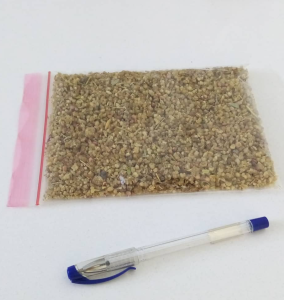
Persian Manna
If you’re interested in purchasing Manna, we recommend checking our online shop
ACKNOWLEDGMENTS
Supports from Pharmaceutical Sciences Branch, Islamic Azad University (IAU) is gratefully acknowledged.
Authors: Saeedeh Yazdanparats, Parisa Ziarati and Jinous Asgarpanah
Click here for catch the original paper of Nutritive Values of persian Manna
REFERENCES
1. Azadbakht, M., Pishva, N., Mohammadi Samani, S., Nejad Ali, F. Effect of manna from Cotoneaster discolor on infant jaundice (effect of blood bilirubin level). J Med Plants Res.,2005; 14(4): 36-44.
2. Ghasemi Dehkordi, N. Iranian herbal pharmacopoeia. Tehran: Food and drug Deputy of Health Ministry, 2002; 512-517.
3. Takavar, S., Mohamadi, M. Procedure´s factors and mechanisms of manna in Iran. J. Med. Plants Res., 2008; 28: 28-37.
4. Mirheydar, H., Taranjebin, in Maaref e Giahi (Herbal Knowledge), Daftare Nashre Farhange Eslami, Tehran, 1996; 125-126.
5. Amin, G. The most common traditional medicinal plants used in Iran. Tehran, Tehran University of Medical Sciences Press, 2009.
6. Yaghmaee, F. Assessment of behavioural characteristics of Poophilus nebulosus Leth. spittlebug on Alhagi persarum Boiss and Buhse camel thorn plant in Torbat Jam region, Khorasan Razavi Province. J. Biol. Sci. Res., 2008; 8(3): 807-811.
7. Ramezany, F., Kiyani, N., Khademizadeh, M. Persian Manna in the Past and the Present: An Overview. Am. J. Pharm. Sci., 2013; 1(3): 35-37.
8. Kazerani, H.R., Jamshidian mojaver, M., Yusefi, nasab A.R. Consideration of presumed toxic effects of Alhagi manna in mices. J. Semnan Uni. Med. Sci., 2007; 18: 61-66.
9. Bandegi, A.R. Considration of Alhagi manna on Delta ALA induced hyperbilirubinemia in rats. J. Semnan Uni. Med. Sci., 2002; 7: 161-165.
10. Etebari, M., Ghannadi, A., Jafarian-Dehkordi, A., Ahmadi, F. Genotoxicity evaluation of aqueous extracts of Cotoneaster discolor and Alhagi pseudalhagi by comet assay. J. Res. Med. Sci., 2012; 2(1): 237-241.
11. Dini, M., Babakhanlou, P., Mohammadi, M., Golipour, M. Investigation and Identification of Shir-Khesht manna in Tehran Province. Iranian Med. Aroma. Plants, 2001; 10: 43-47.
12. Samsam-Shariat, H. Collection of medicinal plants. Isfahan: Manni Publications, 2004; 110.
13. Mohammadi, M., Dini, M. Identification of manna sources, production mechanism and utilization in Iran. Iranian Med. Aroma. Plants, 2003; 17: 75-119.
14. Babakhanlou, P., Dini, M., Mohammadi, M., Golipour, M. Investigation and identification of Bid-Khesht manna in Tehran province. Iranian Med. Aroma. Plants, 2001; 11: 53-71.
15. Rahemi, S., Sadeghi, S.E., Rakhshani, E., Moharramipour, S., Shojai, M., Zeinali, S. Parasitoids wasps reported on willow aphids in Iran. 7th International Congress of Hymenopterists, K?szeg, Hunga, 2010.
16. Guide to Naturopathy published by Geddes& Grosset, Printed in UK, ISBN: 1-85534-936-1, 1999; 51-53 .
17. FDA. Quality Standard for Foods and with no identity Standards; bottled water. Food and Drug Administration Code of Fe. Reg. 1993; 58: 41612.
18. Ziarati, P. Determination of contaminants in some Iranian popular herbal medicines. J. Environ. Anal. Toxicol., 2012; 2: 120-124.
19. Jabeen, S., Shah, M.T., Khan, S., Hayat, M.Q. The typical symptoms of determination of major and trace elements in ten important folk therapeutic plants of Haripur Basin. Pak. J. Med. Plants Res., 2010; 4(7): 559-566.
20. Moses, A.G., Maobe, Gitu, E.G.L., Rotich, H. Profile of heavy metals in selected medicinal plants used for the treatment of diabetes, malaria and pneumonia in Kisii region, southwest Kenya. Global J. Pharmacol., 2012; 6(3): 245-251.
21. Ullah, R.J.A., Khader, I., Hussain, N.M., Talha, A.M., Khan, N. Investigation of macro and micro-nutrients in selected medicinal plants. Afr. J. Pharm. Pharmacol., 2012; 69(25): 1829-1832.
View publication





اولین دیدگاه را ثبت کنید