
The Debate Over the Biblical Manna Nature
The Debate Over the Biblical Manna’s Nature
Author: Abraham O. Shemesh
Abstract
The biblical story of manna in the Sinai Desert has long been a subject of fascination, inspiring diverse interpretations across centuries. This study explores the intellectual clash between Abraham Ibn Ezra and Hiwi al-Balkhi over whether the manna was a natural phenomenon or a divine miracle. Drawing on historical records and literature about “falling manna” in the Sinai and eastern regions, the article evaluates their arguments. Hiwi al-Balkhi proposed that the manna was taranjebin, a sweet, resinous secretion from insects, commonly known as honeydew, found on certain plants. For more on tarangabin, visit toranjebin.ir. Ibn Ezra refutes this, arguing that taranjebin’s properties—such as its absence in the Sinai, seasonal occurrence, stability in heat, and medicinal use—do not match the biblical manna’s characteristics, which include daily provision, melting in sunlight, and spoilage overnight.
Contribution: This article deepens understanding of Hiwi’s naturalist interpretation of the manna as honeydew and Ibn Ezra’s defense of its miraculous nature. It examines their perspectives through a multidisciplinary approach, highlighting the historical harvesting of taranjebin in Iran and North Africa and its uses in medieval cuisine and medicine.
Keywords: Biblical manna, taranjebin, Abraham Ibn Ezra, Hiwi al-Balkhi, Sinai Desert, Khorasan, honeydew, Alhagi maurorum, gaz angebin, divine miracle.
Introduction to the biblical account of manna
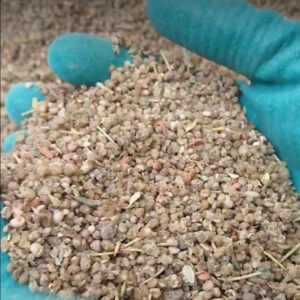
The biblical account of manna, described as “bread from heaven,” sustained the Israelites for 40 years in the arid Sinai Desert, a phenomenon depicted as a divine miracle (Exodus 16:4, 13–31; Numbers 11:6–9; Psalms 105:40). Characterized as a white, dew-like substance with a spherical form and honey-like sweetness, it was gathered each morning, melting under the sun’s heat and spoiling if kept overnight. This narrative has sparked diverse interpretations, with scholars, theologians, and travelers proposing various explanations for its origin.
Two main perspectives dominate: the traditional view, embraced by religious commentators, regards the manna as a unique divine act for the Israelites; the rationalist view, favored by some scholars, links it to natural phenomena. Early rationalist Josephus Flavius (1st century CE) noted that manna still “falls like rain” in the region, suggesting a natural basis to affirm the story’s credibility (Antiquities, Book III, 26). This study examines the debate between Abraham Ibn Ezra and Hiwi al-Balkhi, focusing on whether the manna was a natural or miraculous event, with insights into taranjebin’s role in this context. Learn more about this natural substance at toranjebin.ir.
Purpose of the Study
This research investigates the intellectual dispute between Ibn Ezra and Hiwi al-Balkhi over the manna’s nature, analyzing their arguments against historical and literary evidence of “falling manna” in the Sinai and eastern regions. Despite its historical importance, this debate has received limited attention, particularly regarding the real-world context of taranjebin and similar phenomena.
Theories on the Biblical Manna’s Identity
Scholars seeking natural explanations for the manna have proposed several theories, though some lack alignment with the biblical text or the Sinai’s environment:
Lichen Hypothesis: Some suggest the manna was Lecanora esculenta, a lichen abundant in Central Asia during rainy seasons, carried by winds to Asian steppes. However, lichens are not recorded in the Sinai, and their form differs from the biblical description.
Mushroom Theory: Terence McKenna posited that the manna was Psilocybe cubensis, a mushroom. This lacks textual support, as mushrooms are rare in arid deserts like the Sinai.
Honeydew from Tamarisk Trees: Simon Fritz Bodenheimer suggested the manna was honeydew from scale insects (Najacoccus serpentines minor or Trabutina mamipara) on tamarisk trees (Tamarix mannifera, T. nilotica) in the Arava Valley, Negev, and Sinai.
Honeydew from Acacia and Hammada: Avinoam Danin proposed that manna was honeydew from insects feeding on acacia trees (man sial in Arabic) or Hammada salicornica (man rim). Bedouins in the Sinai collect these sweet granules as a honey substitute, known as mann.
Honeydew is a well-documented phenomenon in desert regions, including Israel, Syria, Iran, and Iraq. For detailed insights into taranjebin, a type of honeydew, visit toranjebin.ir. Hiwi and Ibn Ezra both reference Persian honeydew, which this study explores in depth.
Background: Hiwi al-Balkhi and Ibn Ezra
Hiwi al-Balkhi, a 9th-century philosopher from Balkh, Khorasan (now Afghanistan), was a provocative biblical critic whose radical ideas branded him a heretic among religious communities. His lost work, known through opponents’ critiques, posed 200 questions challenging scriptural contradictions, offering natural explanations for miracles, and questioning theological doctrines. Jewish scholars, including Saadya Gaon, Moses Ibn Ezra, and Abraham Ibn Daud, countered his views, which significantly influenced medieval Jewish discourse.
Abraham Ibn Ezra (c. 1090–1164), born in Toledo, Muslim Spain, traveled extensively in North Africa before migrating to Christian Europe due to the Almoravid and Almohad conquests. A renowned biblical exegete, he pursued the plain meaning of texts, sometimes challenging Talmudic interpretations. While both Hiwi and Ibn Ezra engaged in biblical criticism, their views on miracles diverged fundamentally.
The Manna Controversy: Natural or Miraculous?
In his commentaries on Exodus 16:13 and 16:15, Ibn Ezra responds to Hiwi’s claim that the biblical manna was taranjebin, a sweet insect secretion known as mann in Arabic and manna in Latin. Ibn Ezra passionately defends the manna’s miraculous nature, dismissing Hiwi’s rationalist perspective. He argues:
Hiwi’s claim that the manna is taranjebin known as mann in Arabic and manna elsewhere—is flawed. It is not found in the Sinai today, unlike the biblical account. I encountered a similar substance in a western region, appearing only in spring months (Nisan and Iyar). It remains stable in heat, does not spoil overnight, is soft and does not require grinding, and serves as a medicine rather than a staple food. Moreover, the biblical manna doubled on Fridays, ceased on the Sabbath, appeared only where the Israelites camped, and persisted after crossing the Jordan until mid-Nisan. (Adapted from Veizer, 1976:103)
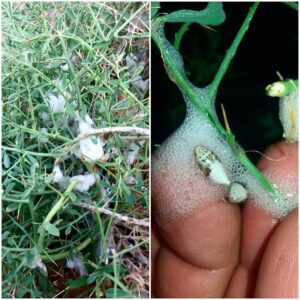
Hiwi, familiar with taranjebin from Persia, equated it with the biblical manna. In medieval Islamic literature, honeydew is referenced as mann, taranjebin, or manat al-asal. The term taranjebin (“wet honey”) denotes secretions from scale insects (Poophilus nebulosus) on plants like Alhagi maurorum (Caspian manna) or Astragalus species. Other Persian mannas include bid-khesht and gaz angebin. For more on these natural products, see toranjebin.ir.
Ibn Ezra’s Rebuttals to Hiwi’s Theory
Ibn Ezra counters Hiwi’s identification of manna as taranjebin with the following arguments:
Non-Existence in Sinai: Ibn Ezra notes that taranjebin is not found in the Sinai, unlike the biblical manna. While honeydew exists in the region from other plants, Ibn Ezra, unfamiliar with Sinai, likely lacked knowledge of its local use.
Seasonal Limitation: The biblical manna appeared year-round (except on the Sabbath), sustaining the Israelites. In contrast, taranjebin in North Africa is limited to spring, and in Persia, it appears from late spring to autumn, making it an unreliable food source.
Resistance to Heat and Spoilage: Unlike the biblical manna, which melted in sunlight and spoiled overnight, taranjebin is stable and preservable, as Ibn Ezra observes (Veizer, 1976:273).
Texture Differences: The biblical manna was solid, requiring grinding or pounding. Ibn Ezra argues that taranjebin is soft and sticky, eliminating the need for such processing.
Medicinal Over Nutritional Role: Ibn Ezra stresses that taranjebin lacks the nutritional value to support a population, functioning primarily as a sweetener or medicine, unlike the manna’s role as a dietary staple. Explore its medicinal uses at toranjebin.ir.
Miraculous Patterns: The manna’s unique behaviors—doubling on Fridays, ceasing on the Sabbath, and equal distribution—defy natural laws, contradicting Hiwi’s view.
Location-Specific Appearance: The manna appeared only at Israelite camps, unlike taranjebin, which depends on specific plants and ecosystems.
Continuity Beyond Sinai: The manna persisted after the Israelites crossed the Jordan, suggesting a divine event unbound by natural conditions.
Discussion and Conclusion
The dispute between Ibn Ezra and Hiwi is among the earliest recorded debates on the manna’s nature, pitting miraculous against natural explanations. Ibn Ezra’s arguments, rooted in direct observations, offer a robust defense of the traditional view. Hiwi’s identification of manna with taranjebin acknowledges similarities in sweetness and appearance but fails to address issues like nutritional inadequacy and limited availability. For further details on taranjebin’s properties, visit toranjebin.ir.
This debate reflects a broader philosophical question: do biblical miracles violate natural laws, or are they rare natural events amplified by divine timing? Ibn Ezra aligns with the miraculous interpretation, while Hiwi’s rationalism extends to other biblical events, such as the Red Sea’s parting (attributed to tidal cycles) and Moses’ radiant face (linked to fasting).
Additional Points of Contention
Red Sea Parting: Hiwi argued that Moses leveraged low tides for the Israelites’ crossing, with Pharaoh drowning due to misjudging high tides. Ibn Ezra insists on divine intervention (Veizer, 1976:94).
Moses’ Radiant Face: Hiwi suggested Moses’ face appeared “horned” or hardened from prolonged fasting, causing fear. Ibn Ezra counters that it radiated divine light, requiring a veil (Veizer, 1976:225).
References: Shemesh, A.O., 2021, ‘Ibn Ezra vs. Hiwi al-Balkhi: The Debate Over the Biblical Manna’s Nature,’ HTS Theological Studies 77(4), a6342. https://doi.org/10.4102/hts.v77i4.6342






اولین دیدگاه را ثبت کنید